Registrations for SAP & SAP Fioneer Financial Services Forum are open! Secure your spot now.

The foundation modern reinsurance requires

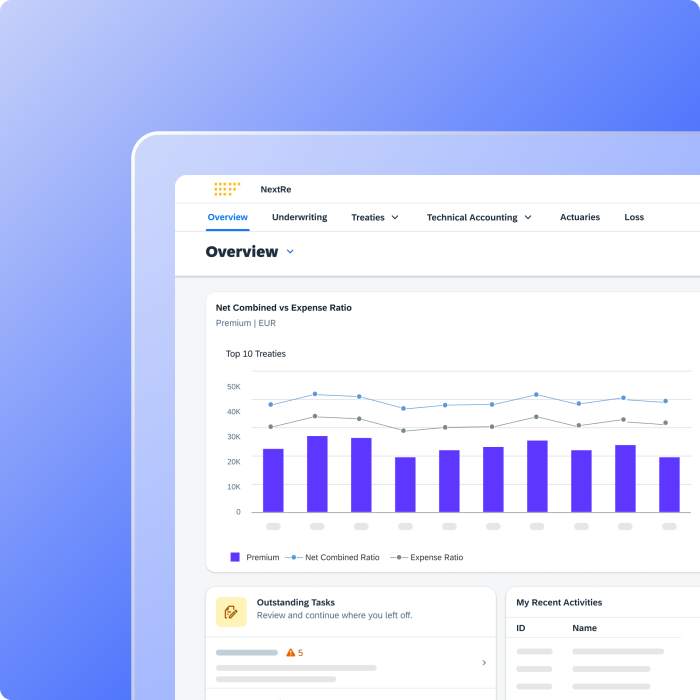
Fioneer NextRe brings end‑to‑end single‑risk and treaty reinsurance together on a shared data foundation, creating the conditions for automation and AI to work where it matters. Built on a cloud‑native architecture and designed to fit within existing environments, it delivers visibility, governance, and confidence across reinsurance operations.
AI by design. Impact by numbers.

2-3x

faster decision cycles

5%

or higher uplift potential in reinsurance results

70%

reduction in throughput times

80%

lower risk caused by manual workarounds

Built around what reinsurance demands

  • Unify data and processes across the reinsurance lifecycle so teams can assess risk, evaluate placement options, and reinsurance intelligence can operate in real time, not days or weeks later. Automated submission management, cession calculations, and placement routing reduce manual handoffs and free teams to focus on underwriting quality and portfolio decisions.

  • Capture data once and validate it at the source with AI-driven extraction, matching, and plausibility checks that reduce manual review. Seamless integration with adjacent systems keeps cessions, accumulations, and reporting consistent while eliminating shadow datasets and spreadsheet sprawl.

  • Embedded controls, documentation, and traceability create a governed audit trail from first capture to final posting. Audit‑ready operations span submissions, quoting, treaties, retrocession, claims, technical accounting, and subledger management, aligned with frameworks and regulations such as Solvency II and IFRS 17.

  • Deploy specialized AI agents to execute routine reinsurance tasks and flag exceptions for human review. This reduces manual coordination, accelerates decisions, and enables a more resilient operating model across the reinsurance lifecycle.

Key features and benefits

Graphical reinsurance program builder

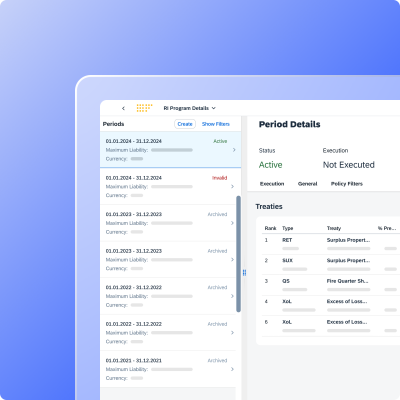
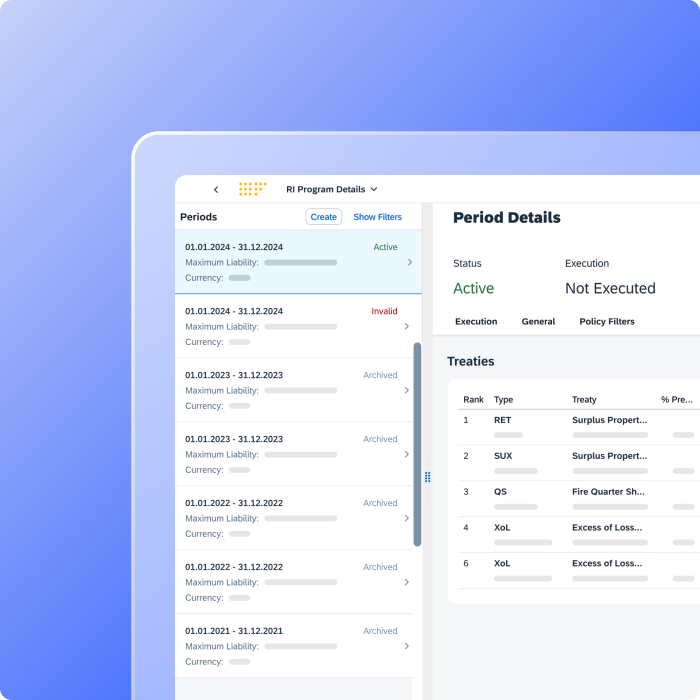
Model, compare, and maintain surplus, XL, quota share, and hybrid structures in a centralized visual builder to evaluate alternative program structures (what-if scenarios) before placement.

Automated cession calculations

Calculate retention, surplus lines, and cession amounts using configurable rules, eliminating manual spreadsheets and reducing errors.

Intelligent placement routing

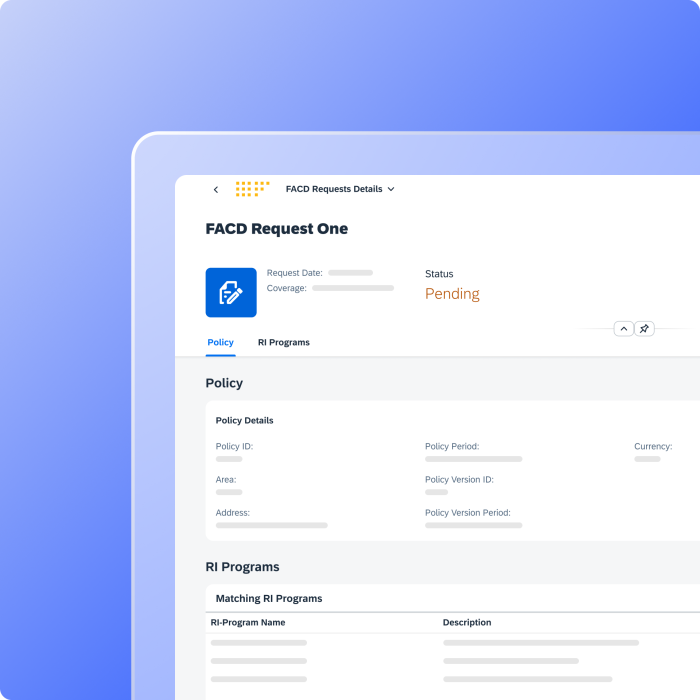
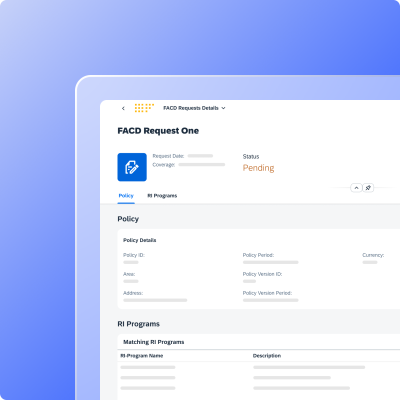
Route facultative requests and program placements through rule‑based workflows that replace email chains and manual coordination.

Accumulation and geo‑cumulus management

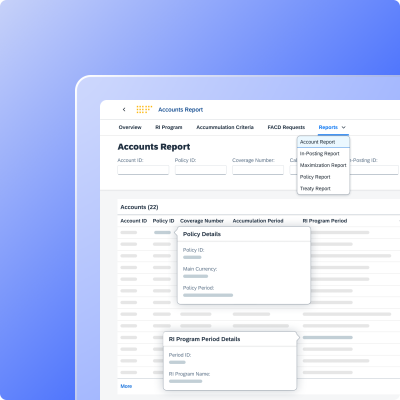
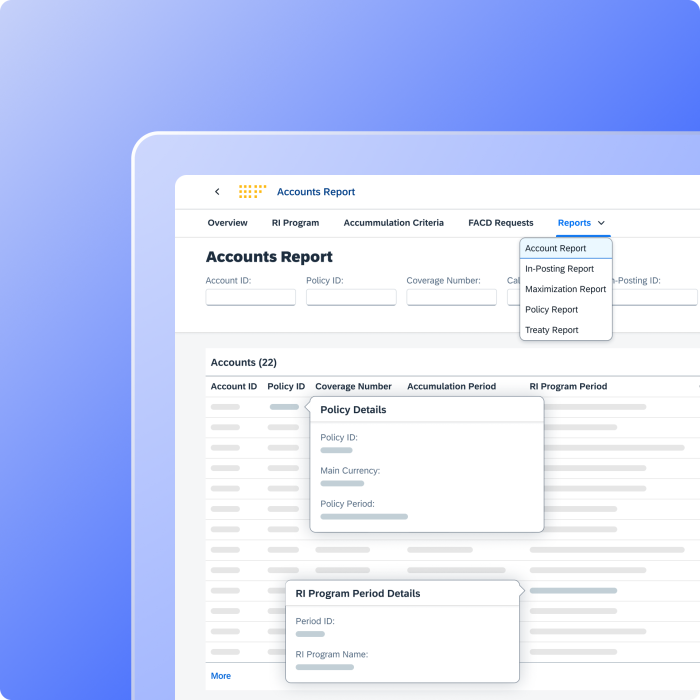
Build, monitor, and analyze accumulations using area, coverage, and geo-coordinates to define clusters, assess exposure concentrations, and highlight opportunities for risk prioritization.

Automated facultative demand handling

Generate facultative and treaty contracts automatically from program logic to ensure consistent linkage between policies, accumulations, and RI programs.

Guided underwriting and reinsurance workflows

Provide role-based processes for underwriting, reinsurance, and finance teams; AI agents handle routine steps, flag exceptions for human review, and accelerate cross-functional handoffs.

Integrated technical accounting

Automate proportional and non-proportional booking flows for premiums, commissions, reserves, and losses directly from contract logic.

AI‑supported document and data validation

AI extracts key terms, compares submissions, and runs plausibility checks across documents, significantly reducing manual review time.

Frequently asked questions

An end-to-end reinsurance platform connects program design, placements, cessions, accumulations, accounting, and reporting through shared data and workflows. This reduces fragmentation across systems and teams, limits manual handoffs, and provides reinsurance, risk, and finance teams with faster visibility throughout the reinsurance lifecycle.

Yes. Fioneer NextRe supports reinsurance operations for both assumed and ceded business, with calculation logic covering proportional and non-proportional structures. This helps insurers manage obligations, financial flows, and reporting more consistently across reinsurance workflows.

Fioneer NextRe supports treaty and facultative reinsurance across portfolio-based and single-risk scenarios. The platform supports proportional and non-proportional structures, including quota share, surplus, excess-of-loss, and hybrid reinsurance program structures.

Yes. Fioneer NextRe is cloud-native and designed to fit within existing technology environments. Its Data Integration Layer helps connect reinsurance workflows to surrounding policy, claims, partner, finance, and reporting systems, enabling insurers to modernize reinsurance execution without creating another isolated application layer.

Fioneer NextRe improves data quality by creating a more consistent foundation for reinsurance decisions, controls, and automation. Its Data Integration Layer consolidates, maps, transforms, and validates information from policy, claims, partner, finance, and reporting systems, helping reduce reconciliation effort from fragmented source data. AI-supported extraction, matching, and plausibility checks help teams identify missing, conflicting, or implausible information earlier in the process.

“Fioneer NextRe applies AI to document-heavy and data-intensive reinsurance workflows. AI-supported capabilities can help analyze slips, contracts, emails, and supporting documents; extract relevant treaty information; assist with data mapping and validation; and detect missing, conflicting, or implausible information earlier in the process.

This helps insurers reduce manual data preparation, accelerate treaty submission processing, improve reinsurance data quality, and resolve issues before they affect underwriting, accounting, or reporting, while keeping expert review, governance, and financial control in place”

Fioneer NextRe embeds controls, documentation, and traceability into reinsurance workflows, creating a governed audit trail from initial data capture to final posting. Audit-ready operations span submissions, quoting, treaties, retrocession, claims, technical accounting, and subledger management, aligned with frameworks and regulations such as Solvency II and IFRS 17.